
Regional University Hospital of Nancy
Closing the sample traceability gap with the 1st Automatic solution
Reducing manual steps and securing traceability were essential—not only for patient safety, but also to support ongoing COFRAC accreditation.
With Radiometer’s 1st Automatic solution, the hospital set out to lower the risk of sample mix‑ups and strenghten confidence in every blood gas result.
A preanalytical phase with little room for error
In France, all medical laboratories must be accredited by COFRAC (Comité Français d’Accréditation), which is done by meeting the ISO 15189 standard, and blood gas is no exception—no matter where it is performed.
During audits, COFRAC inspectors closely examine traceability, training records, quality control logs, and nonconformities, including point‑of‑care testing.
In the complex environment of the ICU, the preanalytical phase is particularly challenging. This is where errors such as as micro clots, samples being processed outside the maximum time limit, and patient sample mix-ups can occur.
As far as point‑of‑care testing is concerned, the most complicated part to master is the preanalytical phase.
- Dr. Marie Toussaint, Clinical Biologist and POC Coordinator, Regional University Hospital of Nancy
Linking the right sample to the right patient—before blood is drawn
With the implementation of the 1st Automatic Solution in the two ICUs, blood gas testing has been streamlined.
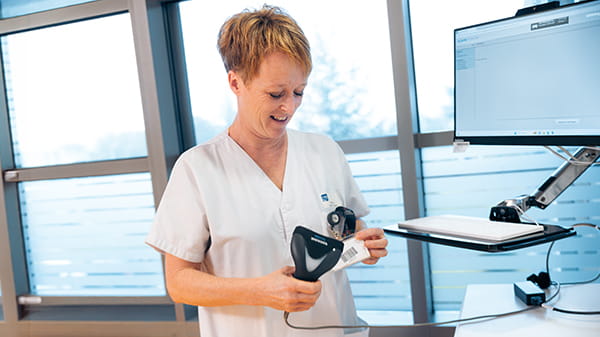
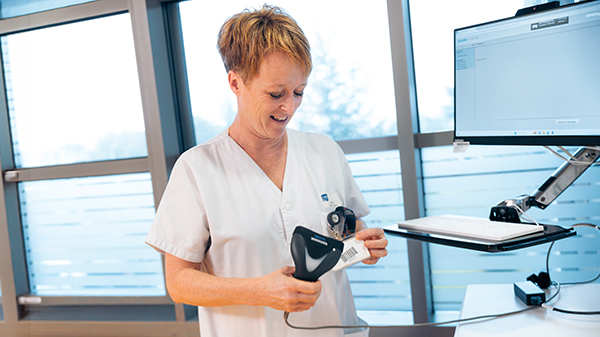
Operator ID, patient ID, and the pre‑barcoded safePICO syringe are now linked before blood is even drawn. The sample is then scanned on the ABL90 analyzer, automatically mixed, and analyzed.
Time traceability makes it easy to verify that analysis is completed within the recommended 30‑minute window—and results are flagged if it is not. For both the lab and ICU staff, this means fewer manual steps and greater confidence in the process.
Radiometer supported us both in writing this new procedure and also in training the nursing teams over several days, on several shifts, day and night.
- Aurélie Thiery, Head Nurse, Medical Intensive Care Unit, Regional University Hospital of Nancy
Discover more in the full story
Download the full customer story (PDF) to read more about:
- 1st Automatic supporting full sample traceability
- 1st Automatic streamlining bloog gas testing and flagging samples processed outside the recommended time interval
- Gaining accreditation confidence by using the 1st Automatic solution
Regional University Hospital of Nancy, France
- Blood gas testing governed by the laboratory under COFRAC / ISO 15189
- More than 50 devices connected to AQURE middleware
- Implemented Radiometer’s 1st Automatic solution in two intensive care units
Cookies are used on this website
Use of cookiesPlease enter a valid email
We will be sending an e-mail invitation to you shortly to sign in using Microsoft Azure AD.
It seems that your e-mail is not registered with us
Please click "Get started" in the e-mail to complete the registration process
Radiometer is using Microsoft AZURE Active Directory to authenticate users
Radiometer uses Azure AD to provide our customers and partners secure access to documents, resources, and other services on our customer portal.
If your organization is already using Azure AD you can use the same credentials to access Radiometer's customer portal.
Key benefits
- Allow the use of existing Active Directory credentials
- Single-sign on experience
- Use same credentials to access future services
Request access
You will receive an invitation to access our services via e-mail when your request has been approved.
When you accept the invitation, and your organization is already using AZURE AD, you can use the same credentials to access Radiometer's customer portal. Otherwise, a one-time password will be sent via e-mail to sign in.